
Do Grounding Sheets Help You Sleep? What the Research Shows
Grounding sheets may help some people fall asleep faster and wake less often during the night, based on a handful of small earthing studies. The evidence is encouraging, although it’s still too limited to call grounding a proven sleep aid.
If restless nights have you looking for a drug-free way to sleep better, grounding sheets have probably come up in your search. Earthing sheets look like ordinary fitted bedding, except conductive silver or stainless steel thread runs through the fabric and links to the ground with a cord.
Below, I walk through what the original studies measured, what owners may notice in the first few weeks and how to set a sheet up safely, so you can decide whether grounding deserves a spot on your bed.
Disclosure: This article is reader-supported and may contain affiliate links.
Key Takeaways
- Grounding sheets use conductive silver or stainless steel fibers connected to the ground port of a grounded outlet or to an outdoor grounding rod.
- In a 2004 pilot study, 12 adults who slept grounded for eight weeks showed lower nighttime cortisol, and 11 of the 12 reported falling asleep faster.
- The research is small, had no control group and relies mostly on self-reported sleep, so the results are promising rather than proven.
- Some people notice mild tingling or a few restless nights while they adjust.
- A tested outlet and bare skin on the fabric are what make the sheet work at all.
What Are Grounding Sheets and How Does Earthing Work?
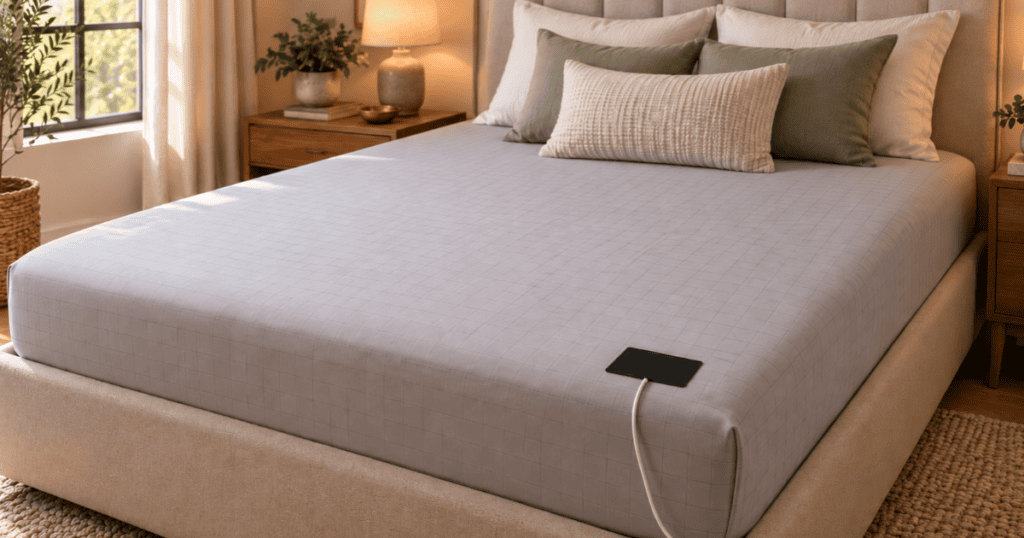
Grounding sheets are fitted or flat bed sheets woven with conductive fibers, usually fine silver thread blended into cotton or a stainless steel weave. A cord snaps onto the sheet and plugs into the ground port of a properly grounded wall outlet, or it runs outside to a metal grounding rod pushed into the soil.
The practice is called earthing, and it’s built on the idea that the Earth’s surface carries a mild negative charge. Walking barefoot on grass or sand puts your skin in direct contact with that charge, and a grounding sheet aims to recreate the same connection indoors while you sleep.
How Grounding Changes Your Body Voltage
Researchers have found that grounding can change the body’s electrical voltage. In a 2004 earthing study discussed below, they measured participants’ body voltage before and after grounding. Once participants were connected to the ground, their voltage readings dropped to nearly zero.
This drop shows that grounding changed the electrical reading, but it doesn’t mean sleep improved. To see whether grounding may help with sleep, we need to look at the sleep results from the study.
Does a Grounding Cord Send Electricity Into Your Bed?
A grounding cord connects only to the outlet’s ground port, which doesn’t carry household current. Many cords also include a built-in resistor that limits current flow as an extra layer of protection, so check the product details for one before you buy.
Grounding Sheets and Sleep Research: The 2004 Cortisol Study and 2012 Earthing Review

Only a small group of studies has looked at grounding during sleep, and most involve a few dozen people or fewer. Two papers come up most often, a 2004 pilot study on cortisol and a 2012 review that pulled the early findings together.
The 2004 Cortisol and Sleep Pilot Study
The best-known sleep study, published in the Journal of Alternative and Complementary Medicine, followed 12 adults with sleep problems, pain and stress. Each person slept grounded on a conductive mattress pad in their own bed for eight weeks, and researchers tested their cortisol at the start and again at week six.
Nighttime cortisol dropped significantly, and the group’s 24-hour cortisol pattern shifted toward a more normal day-night rhythm. Cortisol is the stress hormone that should fall in the evening and rise before you wake, so a smoother curve may help the body ease into sleep.
Participants also logged their symptoms every day, and nearly all of them reported less sleep trouble, pain or stress by the end of the trial.
What the 2012 Earthing Review Found
A 2012 review in the Journal of Environmental and Public Health summarized that pilot study alongside the other early research. According to the review, 11 of the 12 participants said they fell asleep more quickly, and all 12 reported waking up fewer times at night.
The review authors also proposed a mechanism. Their theory is that free electrons from the Earth may help neutralize free radicals, the unstable molecules linked to inflammation, which could explain why grounded sleepers in these studies reported less pain. That idea remains a hypothesis that larger studies haven’t yet confirmed.
How Grounding May Calm the Nervous System at Night
The autonomic nervous system moves the body between an alert fight-or-flight mode and the slower rest-and-digest state that lets heart rate drop and muscles loosen before sleep. Earthing researchers have described a shift toward that calmer state when people are grounded, which may help explain the faster sleep onset reported in the early studies.
Why the Grounding Evidence Is Still Limited
Most grounding research involves small groups and relies on how participants say they slept. The 2004 study also had no comparison group sleeping on an unconnected pad, and it used a conductive mattress pad, so its results don’t automatically carry over to every grounding sheet on the market.
Early research suggests grounding may help regulate cortisol, the body’s main stress hormone, and support natural circadian rhythms. Both play a role in getting restful sleep, but more studies are needed to confirm these benefits.
Sleep Benefits Grounding Sheet Users Report
People who use grounding sheets often describe similar changes after a few weeks. These are personal experiences, though, and results can vary. Here are some of the sleep benefits users have reported.
Falling Asleep Faster
Some grounding sheet users say they fall asleep faster at night. This matches reports from participants in a 2004 grounding study, who also noticed improvements in how quickly they fell asleep. If you often lie awake after turning off the lights, this is one change you can track.
Fewer Nighttime Wake-Ups
Some users report waking up less often during the night and spending less time tossing and turning. Participants in the early grounding study described similar improvements, although the research is too limited to confirm that grounding causes these changes.
Less Morning Stiffness
People who deal with sore joints or tight muscles sometimes report feeling less stiff when they wake up. However, there’s not enough evidence to show that grounding sheets can treat arthritis, muscle pain or other medical conditions.
Waking Up More Rested
Some grounding sheet owners say they wake up feeling more refreshed and less groggy, especially when they also notice fewer nighttime interruptions. Not everyone experiences these changes, so tracking your sleep and how you feel each morning can help you judge whether the sheet is making a difference.
If you’re comparing different materials and designs, our guide to the best organic grounding sheets covers more options.
Grounding Sheets, the Placebo Effect and Better Bedding
Not every sleep improvement people notice with grounding sheets can be linked to grounding itself. Buying new bedding often makes people pay more attention to their sleep habits, and those changes alone may help them sleep better.
The Placebo Effect Can Play a Role
Expecting a grounding sheet to improve your sleep may influence how well you think you slept and how rested you feel the next morning. Those improvements can still feel real, but they don’t necessarily mean the grounding sheet caused them. That’s one reason larger, controlled studies are needed.
Building a Regular Bedtime Routine
Connecting your grounding sheet and getting into bed at the same time each night can become part of a regular sleep routine. Repeating these steps may help your body recognize when it’s time to wind down, even without the grounding effect.
More Comfortable Bedding
Many grounding sheets are made with cotton, including organic cotton options with higher thread counts. If you’re replacing old polyester sheets, you may notice a difference in softness and breathability. Some of the improvement in sleep comfort could come from the fabric itself rather than the grounding connection.
Grounding Sheet Side Effects and Safety Precautions
Grounding sheets are generally considered low risk for healthy adults when connected and used correctly, although safety research is limited. Some users report unusual sensations during the first couple of weeks, and people with certain medical conditions should speak with their doctor before trying one.
Possible Side Effects During the First Few Nights
Some people report mild tingling, vivid dreams or restless sleep when they first start using a grounding sheet. Many say these symptoms fade within the first couple of weeks. Others notice a difference after switching from a grounded outlet to an outdoor grounding rod, although there’s little research showing whether grounding causes these effects.
If you develop dizziness, headaches or other unusual symptoms while using a grounding sheet, stop using it and talk to your doctor.
Who Should Talk to a Doctor Before Using Grounding Sheets
Speak with your doctor before using a grounding sheet if you have a pacemaker or another implanted electrical device, or if you take blood-thinning medication. It’s also sensible to check first if you’re pregnant or managing an ongoing health condition.
Some earthing advocates suggest grounding may affect certain medications, although evidence of these interactions is limited. Your doctor can help you decide whether trying a grounding sheet is appropriate for you.
Electrical Safety Tips for Grounding Sheets
Before connecting a grounding sheet, make sure your outlet is properly grounded using a suitable outlet tester. Choose a grounding cord with a built-in current-limiting resistor, and follow the manufacturer’s safety instructions.
Many brands also recommend unplugging grounding sheets during thunderstorms. Check the cord and connectors regularly for fraying, damage or loose snaps, and stop using them if anything looks worn.
How to Set Up a Grounding Sheet for Better Sleep

A grounding sheet only works when it’s connected to the ground and touching bare skin. A few minutes of setup makes the difference between a working sheet and an expensive piece of bedding.
- Test the outlet with a plug-in outlet tester from any hardware store, and look for the light pattern that shows correct wiring. An outlet that takes a three-prong plug isn’t always grounded.
- Plug the cord into the outlet’s ground port, or use an outdoor grounding rod if the outlet fails the test or you’d prefer to skip household wiring.
- Fit the sheet on your mattress like a regular fitted sheet, conductive side up, and snap the cord onto its connector.
- Confirm the connection with the continuity tester some brands include, or with a basic multimeter.
- Keep bare feet, legs or arms on the fabric, since heavy pajamas or a second sheet on top can block the connection.
- Give it several weeks of nightly use, and keep a simple sleep journal or tracker log to spot changes.
How to Wash Grounding Sheets Without Losing Conductivity
Silver thread is thin and can wear down with harsh washing, which gradually reduces how well the sheet conducts. Wash with a mild, fragrance-free detergent, and skip fabric softener and dryer sheets, which can coat the conductive fibers.
Bleach is also off the list because it can damage silver thread. Air drying or a low-heat tumble keeps the fibers in better shape, and trimmed pet claws help prevent snags that create dead spots in the weave.
Silver vs Stainless Steel Grounding Sheets: What to Look For
The conductive material affects how a grounding sheet feels, how well it holds up after washing and where it fits on your bed. Most grounding sheets fall into two main types.
Silver Fiber Grounding Sheets
Silver fiber grounding sheets have fine silver threads woven into a cotton base. They’re designed to be used as fitted sheets, with the fabric touching your skin. GroundLuxe and Bare Earth both use this design. You can read more about the Bare Earth option in our Bare Earth grounding sheets review.
Silver grounding sheets feel similar to regular cotton bedding, but the silver fibers can wear down after years of washing. Following gentle washing instructions may help them last longer. For more choices, see our guides to silver grounding sheets and organic grounding sheets.
Stainless Steel Grounding Sheets
Stainless steel grounding sheets have a higher amount of metal woven into the fabric. Premium Grounding uses a 30% stainless steel weave, and the brand says you can place its sheet underneath your regular fitted sheet. This lets you keep sleeping on your usual bedding while using the grounding sheet underneath.
Stainless steel also resists tarnishing, which may be helpful if you wash your grounding sheet frequently.
What to Look for When Buying a Grounding Sheet
Choose a grounding sheet with conductive fibers spread across the entire sleeping surface, rather than just a narrow strip. Check for a grounding cord with a built-in safety resistor, and look for deep pockets if you have a thicker mattress.
A money-back guarantee is also helpful, especially if you want several weeks to decide whether grounding works for you. If you’re unsure about buying a full sheet, our grounding sheets vs grounding mats guide explains how the two options compare.
Sleep Hygiene Habits to Pair With a Grounding Sheet
A grounding sheet works best as one part of a broader sleep plan. The habits below cost little or nothing and support better sleep whether or not you decide to try grounding.
Keep the Bedroom Cool
A bedroom around 65°F suits most sleepers, since core body temperature naturally drops as you fall asleep and a warm room works against that. A fan or blackout curtains can help if you can’t adjust the thermostat.
Go to Bed and Wake Up at the Same Time
A regular sleep-wake schedule, weekends included, trains your internal body clock to expect sleep at a set hour. Over time, falling asleep and waking up both get easier.
Put Screens Away an Hour Before Bed
Blue light from phones and laptops can suppress melatonin, the hormone that makes you feel sleepy. A sleep mask or white noise machine adds another layer of protection against the light and sound that can wake you during the night.
So, Do Grounding Sheets Help You Sleep?
Grounding sheets may help some people fall asleep faster and wake up less during the night. Early research on cortisol and sleep offers some support for these possible benefits, but the studies are still small. Trying a grounding sheet for a few weeks and tracking your sleep may help you decide whether you notice any difference.
If you already sleep in a cool room, follow a regular bedtime and still wake up often, you might consider trying a grounding sheet. The risks may be low for most healthy adults when the sheet is used correctly.
Check that your outlet is properly grounded, follow the manufacturer’s instructions for skin contact and keep track of your sleep over the first month.
Best Grounding Sheet for Beginners: Bare Earth Grounding Sheets
The Bare Earth Grounding Sheets are where I’d start if you’re new to grounding, because setup is as simple as putting on a regular fitted sheet. The fabric blends 90% organic cotton with 10% silver fiber at a 400 thread count for softness and breathability.
Bare Earth also backs its sheets with a money-back guarantee, which gives you time to see how sleeping grounded suits you.
Frequently Asked Questions About Grounding Sheets
Do Grounding Sheets Really Work For Sleep?
Grounding sheets may improve sleep for some people, based on small studies where most grounded sleepers reported falling asleep faster and waking less often. The studies are small and largely self-reported, so the evidence is promising but not yet conclusive.
How Long Does It Take For Grounding Sheets To Work?
Grounding sheets can take anywhere from one night to several weeks to show a noticeable effect. The most cited study measured cortisol changes at six weeks and ran for eight weeks in total, so give a new sheet at least a few weeks of nightly use before you decide.
Are Grounding Sheets Safe To Sleep On?
Grounding sheets are generally considered safe for healthy adults when they’re connected to a properly grounded outlet or an outdoor grounding rod. The cord uses only the outlet’s ground port, and a cord with a built-in resistor adds extra protection. Unplug the sheet during thunderstorms.
What Are The Side Effects Of Earthing Sheets?
Earthing sheet side effects are usually mild and short-lived, such as tingling, vivid dreams or a few restless nights in the first couple of weeks. Stop using the sheet and talk to a doctor if dizziness, headaches or other symptoms persist.
Who Should Not Use Grounding Sheets?
People with pacemakers or other implanted electrical devices should not use grounding sheets without medical advice. Anyone taking blood-thinning medication should also check with a doctor first, as should pregnant women and people managing a health condition.
How Do I Know If My Grounding Sheet Is Working?
You can confirm a grounding sheet is working by testing the connection with the continuity tester some brands include or with a multimeter. After that, track how quickly you fall asleep and how you feel in the morning over several weeks.
Health Disclaimer: This article is for educational purposes only and isn’t medical advice. Grounding sheets are not intended to diagnose, treat, cure or prevent any disease, and results vary from person to person. Talk to a qualified healthcare provider before trying grounding if you have an implanted medical device, take blood-thinning medication, are pregnant or have a medical condition.

Sleep Essentials Hub is a sleep blog for readers who want helpful sleep guides and honest product recommendations. We’re passionate about better rest, with a focus on pillows and bedding, sleep aids, sleep apnea and CPAP gear, natural sleep supplements, sleep tech, and simple ways to improve your sleep environment. We’re here to help you choose products that support deeper sleep, greater comfort, and a better night’s rest without overspending.